
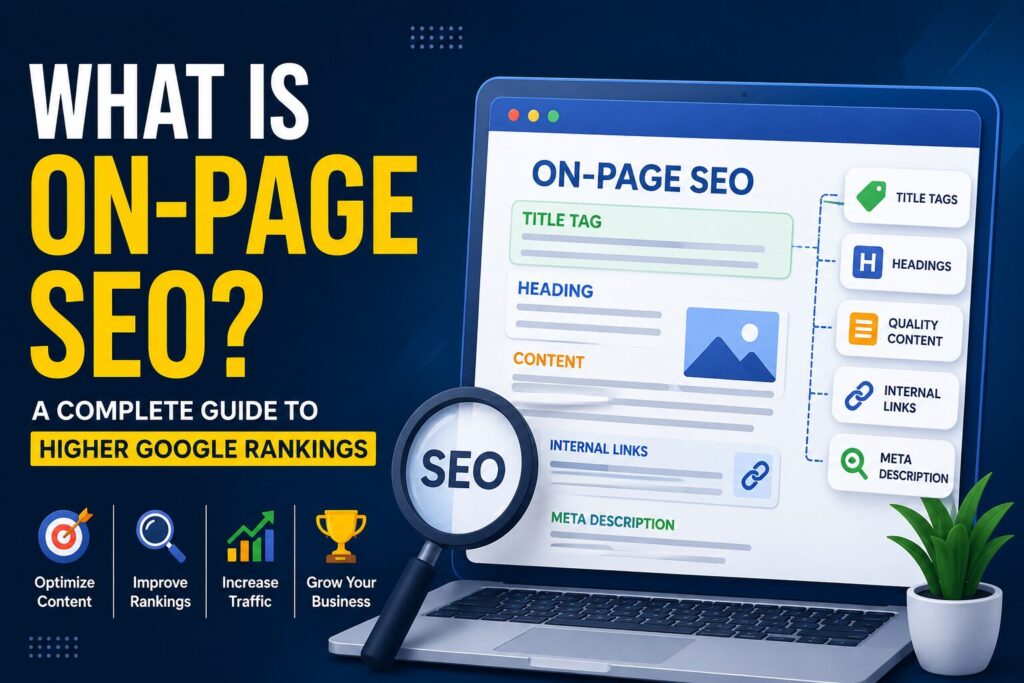
What Is On-Page SEO? The Complete Beginner's Guide to Higher Google Rankings
What Is On-Page SEO is one of the most important concepts in digital marketing. If you want to rank higher on Google, understanding What Is On-Page SEO is the first step toward improving your website’s visibility.
On-page SEO is the foundation of every effective SEO strategy. No matter how many backlinks you build or how active you are on social media, your website won’t achieve its full ranking potential if your pages are not properly optimized. In this guide, you’ll learn What Is On-Page SEO, why it matters, and how to optimize every page according to Google’s latest ranking algorithms.
What Is On-Page SEO?
If you’re asking What Is On-Page SEO, the answer is simple. On-page SEO refers to the process of optimizing individual web pages so they rank higher in search engines and provide a better experience for users.
This includes optimizing your page title, headings, content, images, URLs, internal links, meta descriptions, and overall website structure. Unlike off-page SEO, which focuses on backlinks and external signals, on-page SEO gives you complete control over everything happening on your website.
Understanding What Is On-Page SEO helps businesses improve search visibility while making content more valuable and relevant for readers.
Why Is On-Page SEO Important?
Knowing What Is On-Page SEO is only the beginning. The real value comes from understanding why it plays such an important role in Google’s ranking system.
Google wants to provide users with the most relevant and useful content. Proper on-page optimization helps search engines understand your page while improving user experience.
Benefits of on-page SEO include:
- Higher rankings on Google
- Increased organic website traffic
- Better click-through rates
- Improved user experience
- Lower bounce rate
- Higher conversion rates
- Stronger website authority over time
When your content follows Google’s best practices, it becomes easier for both search engines and users to understand.
Key Elements of On-Page SEO
Once you understand What Is On-Page SEO, it’s time to learn the essential elements that improve rankings.
1. Optimize Your Title Tag
Your title tag is one of the strongest ranking factors. Include your primary keyword naturally near the beginning.
Example:
What Is On-Page SEO? Complete Guide for Beginners
Keep your title between 50–60 characters for the best results.
2. Write an Engaging Meta Description
Although meta descriptions are not direct ranking factors, they improve click-through rates.
Example:
Learn What Is On-Page SEO and discover proven optimization techniques that help websites rank higher on Google and attract more organic traffic.
Aim for 150–160 characters.
3. Use Proper Heading Structure
Google prefers well-organized content.
Use:
- One H1
- Multiple H2 headings
- Supporting H3 headings
This structure improves readability and helps search engines understand your content hierarchy.
4. Create High-Quality Content
High-quality content remains Google’s top ranking factor.
When explaining What Is On-Page SEO, provide accurate information, practical examples, and actionable advice. Avoid keyword stuffing and focus on solving the reader’s problem.
Write naturally while keeping your focus keyword within the recommended density.
5. Optimize Images
Images improve user engagement when optimized correctly.
Best practices include:
- Compress images
- Use descriptive filenames
- Add keyword-rich alt text
- Choose modern image formats like WebP
Example Alt Text:
“What Is On-Page SEO optimization checklist”
6. Use Internal Links
Internal linking helps Google discover your pages while keeping visitors engaged.
For example, if you have blogs about Technical SEO or Local SEO, link them naturally within your article.
7. Add External Links
Linking to trustworthy websites increases content credibility.
Reference authoritative sources like Google Search Central whenever appropriate.
Best Practices for On-Page SEO
If you truly want to master What Is On-Page SEO, follow these proven best practices:
- Write original content
- Match user search intent
- Use short and descriptive URLs
- Add your keyword naturally
- Improve page loading speed
- Make your website mobile-friendly
- Use schema markup where applicable
- Keep paragraphs short
- Include images and visuals
- Regularly update old content
Following these techniques helps improve both rankings and user satisfaction.
Common On-Page SEO Mistakes to Avoid
Many beginners learn What Is On-Page SEO but still make mistakes that prevent higher rankings.
Avoid these common issues:
- Keyword stuffing
- Duplicate content
- Missing title tags
- Poor heading structure
- Slow website speed
- Broken internal links
- Missing image alt text
- Thin or low-value content
- Ignoring mobile optimization
- Writing for search engines instead of users
Google rewards websites that prioritize quality and user experience.
On-Page SEO Checklist
Before publishing any page, use this checklist:
✔ Primary keyword in the title
✔ Keyword in the first paragraph
✔ Keyword in at least one H2 heading
✔ Optimized meta description
✔ SEO-friendly URL
✔ Image alt text added
✔ Internal links included
✔ External authority links added
✔ Mobile-friendly design
✔ Fast page loading speed
✔ Well-structured headings
✔ Original, valuable content
Completing this checklist significantly improves your chances of ranking well.
Conclusion
Now that you understand What Is On-Page SEO, you can see why it’s one of the most important parts of any SEO strategy. Every optimized title, heading, image, and paragraph helps search engines understand your content while providing a better experience for visitors.
Learning What Is On-Page SEO is not just about improving rankings—it’s about creating content that people genuinely enjoy reading. By following Google’s latest best practices and consistently optimizing your pages, you’ll build a stronger online presence, attract more organic traffic, and achieve long-term SEO success.
Start applying these on-page SEO techniques today, and your website will be better positioned to compete for valuable search rankings.